Pill Capsule Endoscopy

Gastrointestinal Institute

No Wires, Belts or Sedation Required

CapsoCam

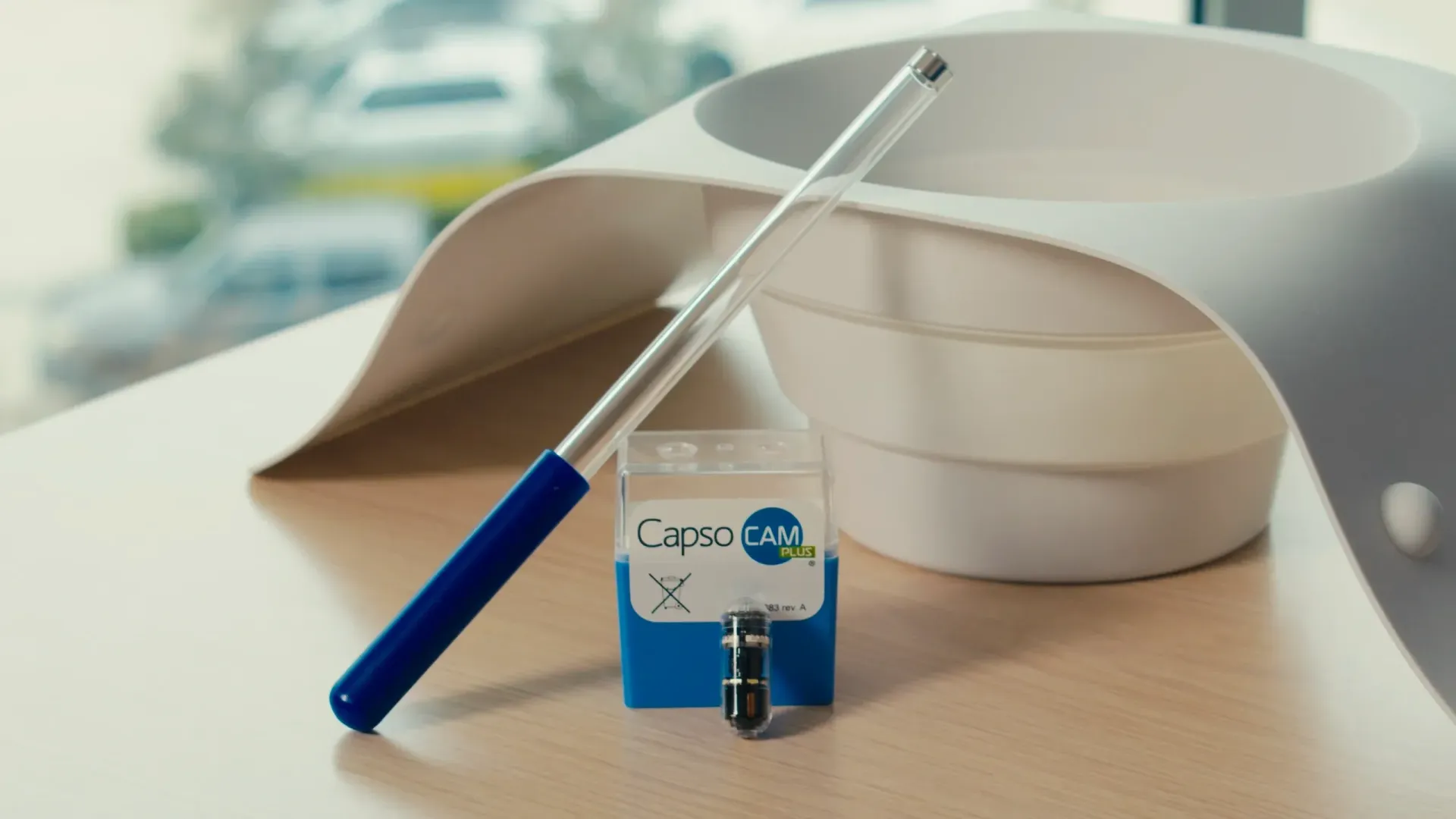
Capsule endoscopy is a procedure in which you swallow a vitamin-sized capsule that takes thousands of images as it moves through your digestive system. CapsoCam Plus® is the only capsule endoscopy system that provides you total freedom and privacy during your procedure. All of the diagnostic data is stored onboard the capsule, so the exam is performed without belts, harnesses, wires or leads. You are free to go about your normal routine during the examination. 


You can be sure that your doctor is getting more information, as CapsoCam Plus is the only capsule endoscope that captures a full 360° panoramic view of the walls of your intestine. This provides your doctor more comprehensive visualization, allowing for a more complete exam.


After the capsule passes through your digestive tract, you will collect the capsule using a specially designed capsule retrieval kit and then return the capsule to your physician. Your physician will download and view the images.
Common Indications for Capsule Endoscopy


Obscure Gastrointestinal Bleeding


The most common reason that a capsule endoscopy might be performed is to evaluate obscure gastrointestinal (GI) bleeding.


Patients who have unexplained iron deficiency anemia or who are bleeding from the GI tract will typically first be evaluated with a colonoscopy and an upper GI endoscopy (EGD). If neither the colonoscopy nor the EGD are able to identify the source of the bleeding, it is referred to as “obscure GI bleeding” or “suspected small bowel bleeding”.


Once a patient is suspected to have small bowel bleeding, a capsule endoscopy examination may be performed. Approximately 5% of all obscure GI bleeding emanates from the small bowel, these are most caused by small vascular lesions called angioectasias. Other causes of bleeding may include:


  • Erosions
  • Hereditary conditions (rare)
  • Inflammation
  • Masses
  • Tumors
  • Ulcerations


Crohn’s Disease


Capsule endoscopy may also be used in the examine for Crohn’s Disease. Crohn’s disease is a type of inflammatory bowel disease (IBD) that may cause symptoms such as abdominal pain, diarrhea, fever, and weight loss.


Tumors


While less common, small bowel capsule endoscopy is also used to examine the small bowel for tumors.


Celiac Disease


Capsule endoscopy may be used to study patients with celiac disease.


Contraindications

Small bowel obstruction is a contraindication for capsule endoscopy. The CapsoCam Plus video capsule is contraindicated in patients:


  • Who have known or suspected gastrointestinal obstructions, strictures or fistula
  • Who are pregnant
  • Who have gastroparesis
  • Who have a swallowing disorder


Patient Brochure

* Documentation and images provided by the CapsoCam website, https://capsovision.com/

IMPORTANT REMINDER: This information is intended only to provide general guidance. It does not provide definitive medical advice. It is very important that you consult your doctor about your specific condition.

For Dr. Matter's prep instructions pre and post procedure, please click here to reference our Prep page.

By km3nghok1iwrt70v August 29, 2025
Painless, Accurate, Noninvasive Way to Assess Liver Health
Colonoscopy Equipment — Normal, IL — Gastrointestinal Institute
November 16, 2023
What is colonoscopy?
November 15, 2023
Diagnostic CT Services
Anaesthetist Monitoring Medical Condition on a Screen — Normal, IL — Gastrointestinal Institute
September 22, 2023
Monitored Anesthesia Care (MAC) is the intravenous administration of mild sedatives to help a patient relax and relieve anxiety during minor procedures that do not require general anesthesia. These procedures, such as biopsies and colonoscopies, typically require the injection of a local anesthetic to numb the surgical site. This is different from general anesthesia because you remain breathing on your own during the procedure and do not have a breathing tube. Your doctor will monitor you throughout the procedure just the same as he or she would during general anesthesia.
Woman Getting Inhalation Sedation — Normal, IL — Gastrointestinal Institute
September 22, 2023
Conscious sedation is a combination of medicines to help you relax (a sedative) and to block pain (an anesthetic) during a medical or dental procedure. You will probably stay awake but may not be able to speak. Conscious sedation lets you recover quickly and return to your everyday activities soon after your procedure.
Virtual Colonoscopy — Normal, IL — Gastrointestinal Institute
September 22, 2023
What is the difference between the conventional colonoscopy and the virtual colonoscopy?
Flexible Sigmoidoscopy — Normal, IL — Gastrointestinal Institute
September 22, 2023
What is Flexible Sigmoidoscopy?
Liver Biopsy — Normal, IL — Gastrointestinal Institute
September 22, 2023
What is Liver Biopsy?
Man Suffering from Severe Hemorrhoids — Normal, IL — Gastrointestinal Institute
September 22, 2023
Hemorrhoid banding is a procedure used to treat painful, swollen hemorrhoids. The procedure is most often done because the hemorrhoids: (1) are bleeding severely, (2) are severely painful, (3) they contain a blood clot (thrombosed hemorrhoid) or, (4) they protrude through the anus (prolapsed hemorrhoids).
More Posts